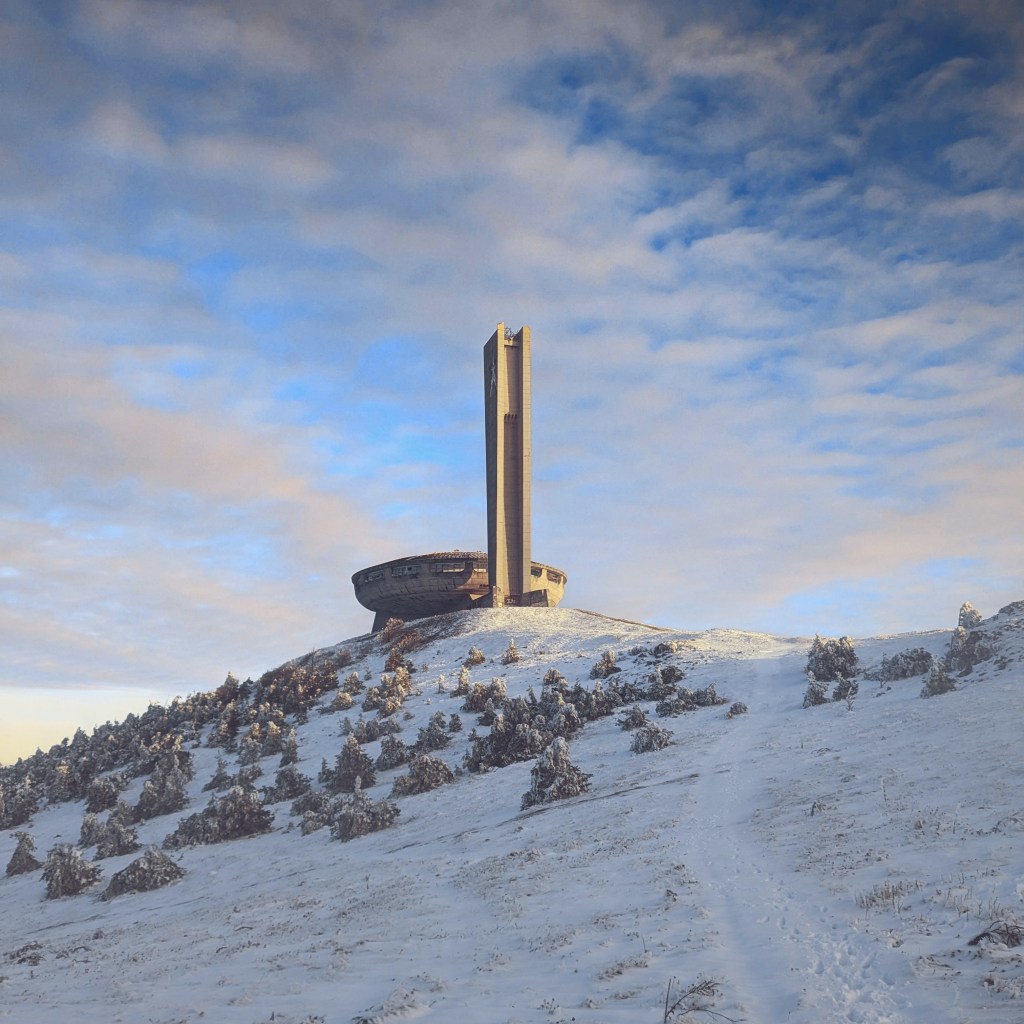
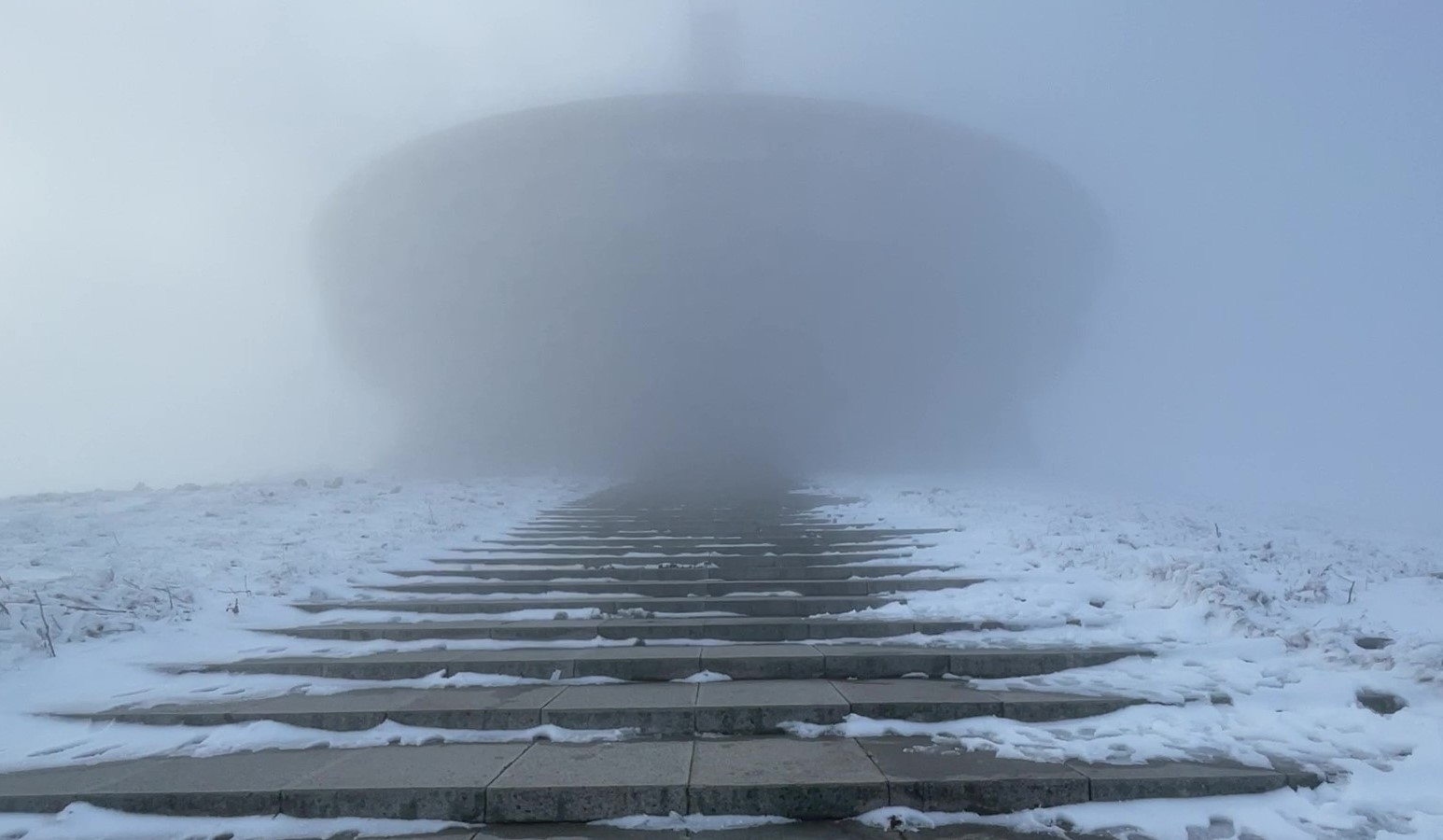
Driving into the mountains of Bulgaria to visit the iconic Buzludzha Monument felt like entering another world. As we climbed higher, the snow began to appear, first as a light dusting, then thickening steadily. By the time we reached the monument, the snow was ankle-deep, and visibility had shrunk to a few meters ahead. The once-clear mountain road was now enveloped in a heavy cloud, and the monument itself was entirely hidden from view. It felt as if we were about to step into a mystery.
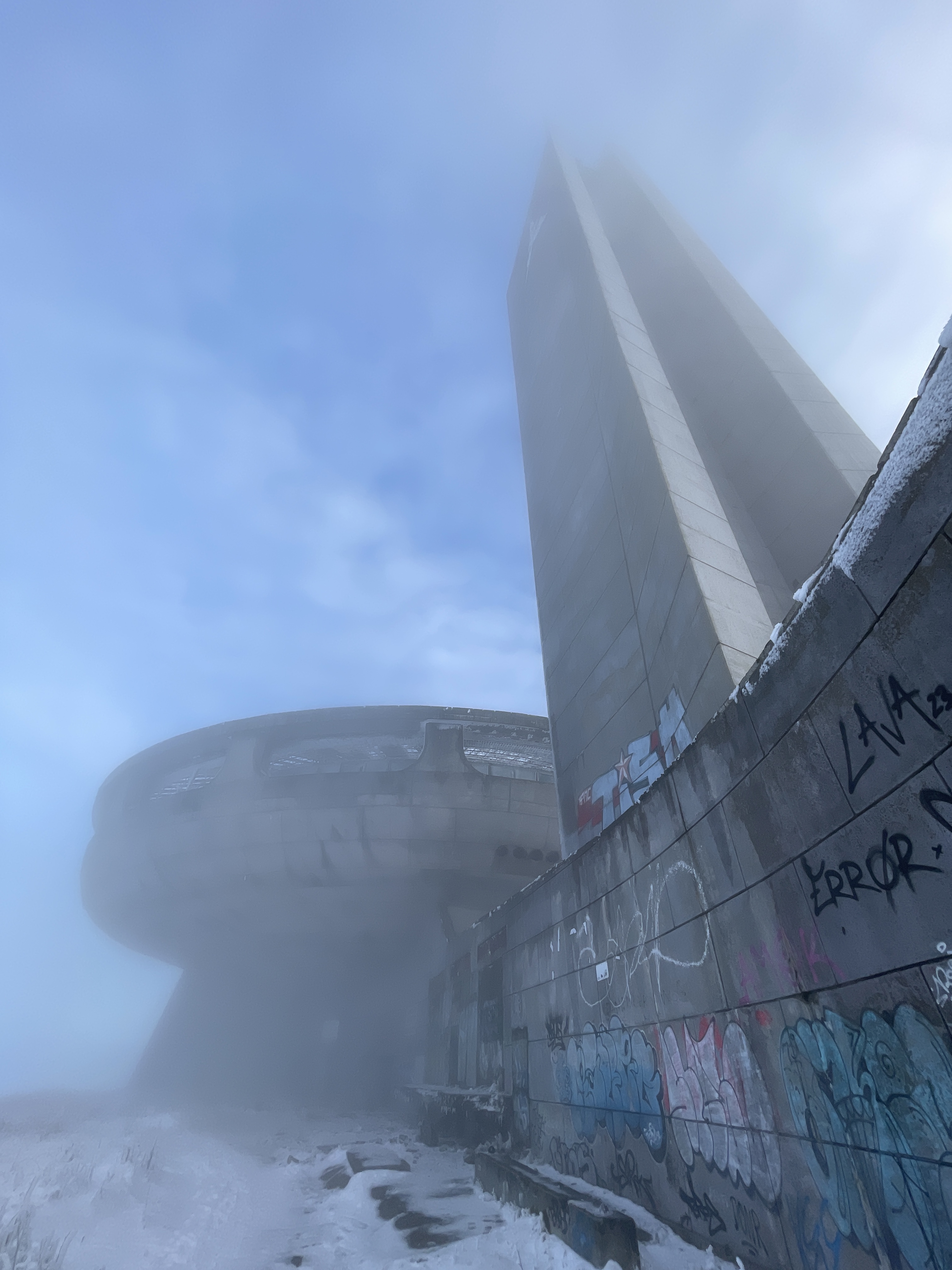
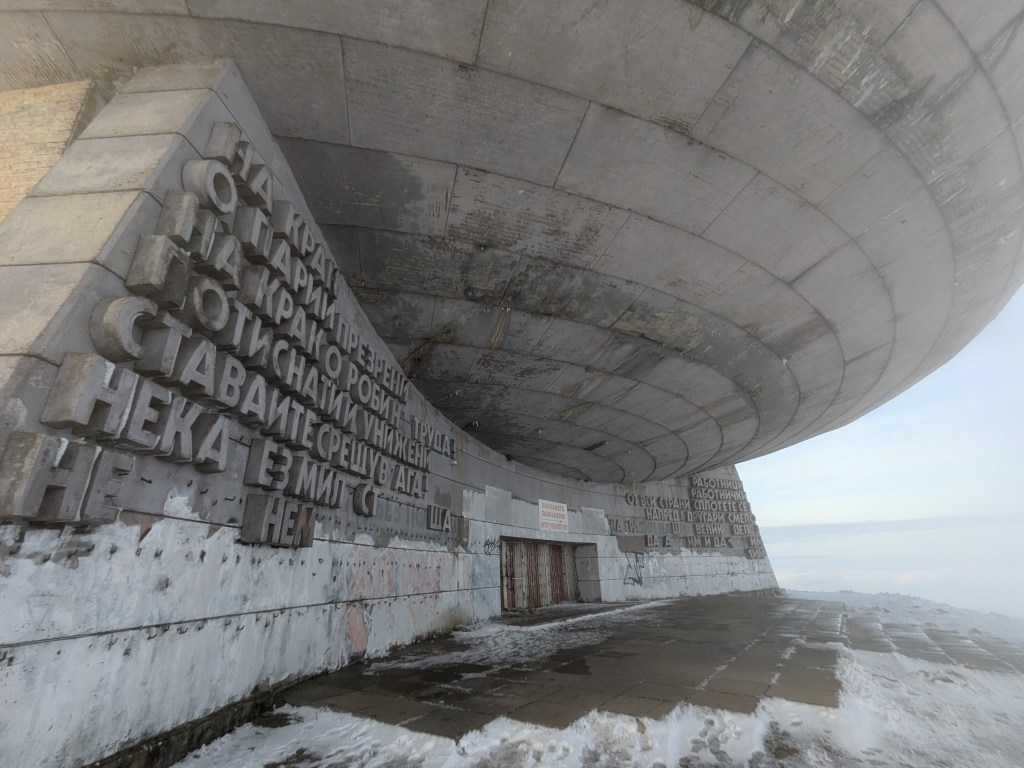
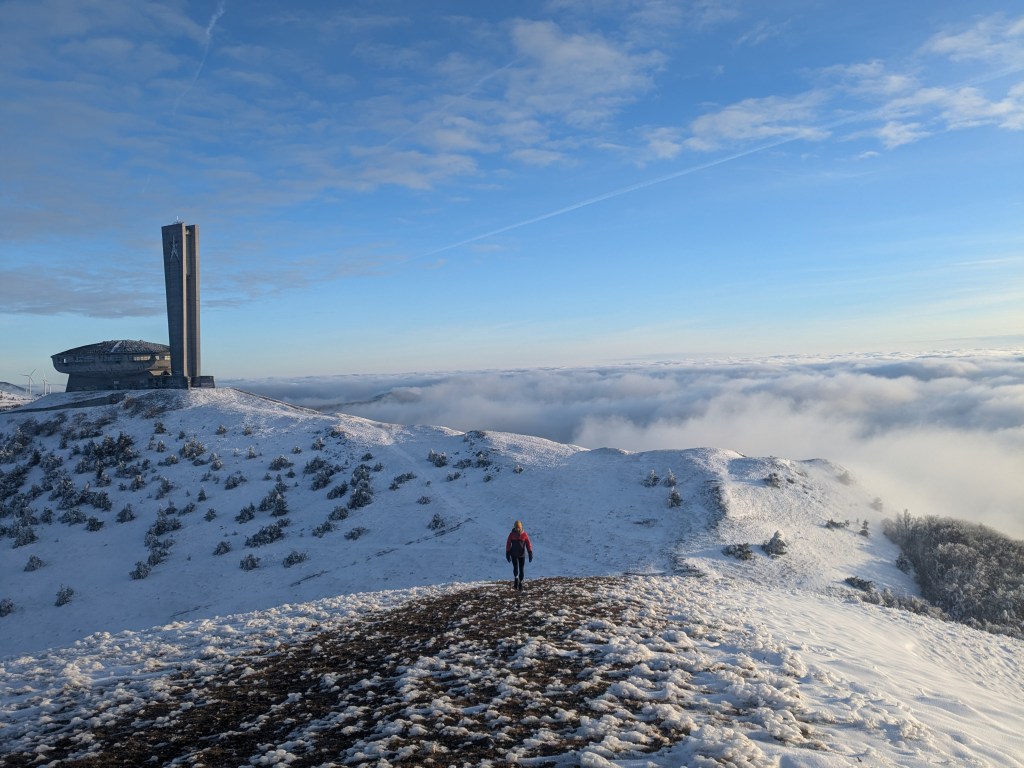
Climbing the steps toward it, we could barely see what lay ahead. And then, slowly, the monument began to emerge from the cloud—a hulking, otherworldly structure looming above us. The closer we got, the more imposing and unsettling it became. The sheer size and shape of the building, combined with the swirling snow and mist, created a sense of drama unlike anything I’d experienced before. Just as we reached the top, the wind picked up, scattering the cloud in bursts. Suddenly, we were above the mist, standing beneath crystalline blue skies. It felt as if we’d emerged into a surreal winter planet, with the Buzludzha Monument as its centerpiece.
The History of the Buzludzha Monument
The Buzludzha Monument, officially known as the House-Monument of the Bulgarian Communist Party, was completed in 1981 to commemorate the founding of the Bulgarian Socialist Movement in 1891. Located on Buzludzha Peak in the Balkan Mountains, the structure is one of the most striking examples of Brutalist architecture in the world. Designed by architect Georgi Stoilov, the monument was intended to symbolize the unity and strength of the Bulgarian Communist Party.
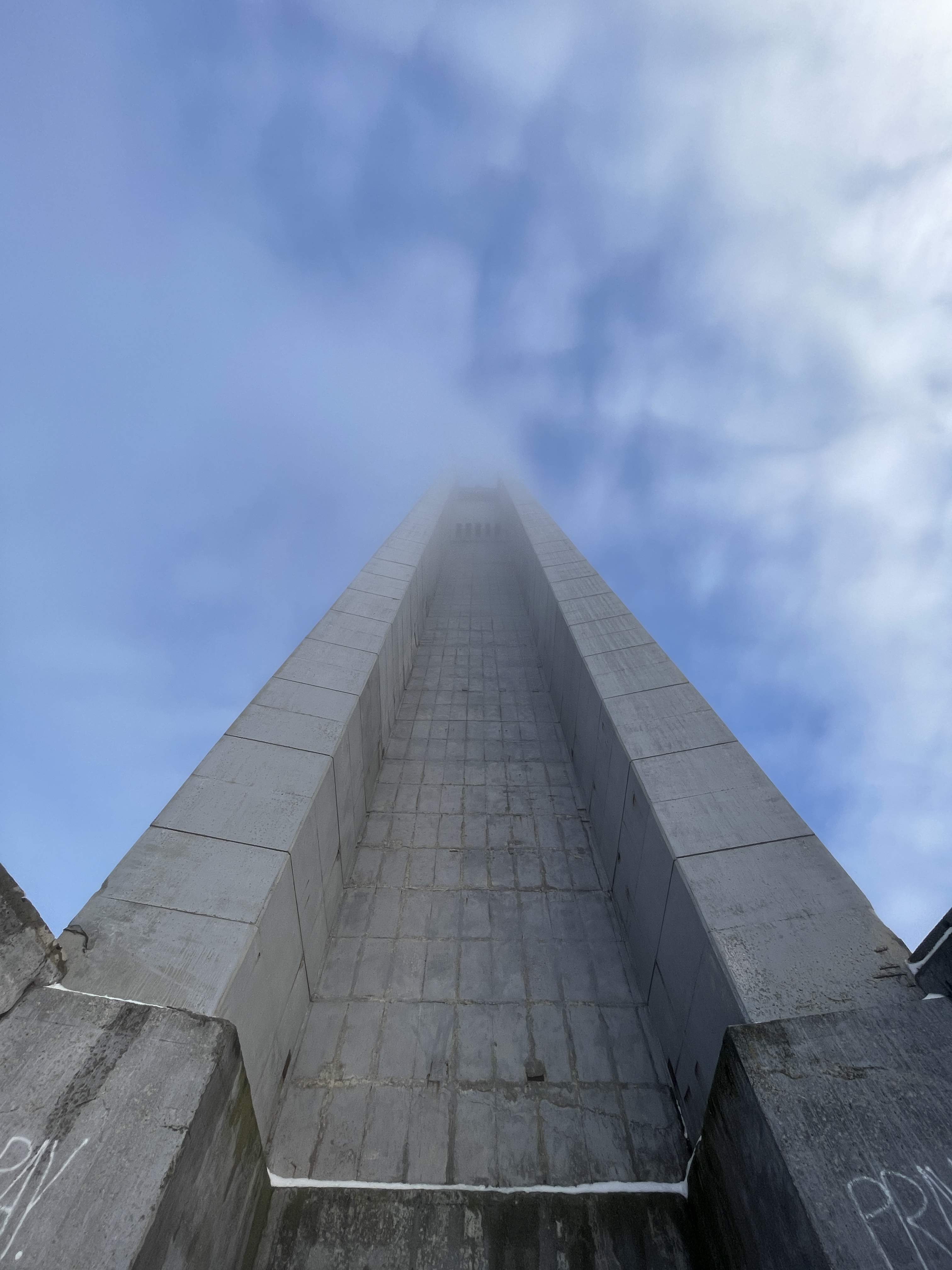
The building’s design is unmistakable: a massive saucer-shaped structure perched on the mountain, with a soaring concrete tower topped by a red star. The interior once featured elaborate mosaics depicting workers, communist leaders, and socialist ideals, covering over 900 square meters. At its height, the monument served as a grand assembly hall and a celebration of communist ideology.
However, the fall of communism in Bulgaria in 1989 marked the end of the monument’s use. It was abandoned, left to decay as a symbol of a contentious past. Today, the Buzludzha Monument is both a ruin and a point of debate. While some see it as a powerful piece of history worth preserving, others argue it represents a painful and oppressive era best left behind.
A Controversy Over Its Future
The debate over the monument’s future has raged for years. Conservationists and architects argue for its restoration, citing its architectural significance and the potential for it to serve as a museum or cultural center. Advocates envision a space where Bulgaria’s complex history can be explored and understood, rather than erased.
Opponents, however, see it as an unwelcome reminder of a repressive regime. They question whether resources should be spent preserving a monument to a failed ideology, especially in a country still grappling with the legacies of communism.
In recent years, organizations like the Buzludzha Project Foundation have made progress in securing funding and international support for its preservation. Plans have included stabilizing the structure, restoring the mosaics, and opening it to the public as a historical and educational site. Yet, as of now, the monument remains closed, its fate uncertain.
Practical Tips for Visiting
For travelers, visiting the Buzludzha Monument is an unforgettable experience, though it’s not without its challenges. The site is remote, and the weather can be unpredictable, especially in winter. Wear sturdy shoes and layers to stay warm, and be prepared for snow or wind, even if conditions seem mild at the base of the mountain.
Though the interior is officially off-limits, the exterior alone is worth the trip. The surrounding views of the Balkan Mountains are breathtaking, especially if you’re lucky enough to rise above the clouds as we did. Reaching the site early or late in the day can also add to the atmosphere, as shifting light transforms the monument and its surroundings.
Reflection
The Buzludzha Monument is more than just an architectural curiosity—it’s a reminder of the ways history, memory, and ideology shape our landscapes. Standing beneath its looming presence, surrounded by the stark beauty of winter, I couldn’t help but feel a deep sense of awe. The structure’s future may be uncertain, but its power to provoke thought and emotion is undeniable.
For anyone traveling through Bulgaria, the journey to Buzludzha is well worth it. It’s a place where nature and history collide in ways that are both surreal and profound, offering a unique perspective on the past and an unforgettable experience in the present.

If you enjoyed reading this post, please consider buying me a coffee so I can keep travelling and bringing you fascinating content from life on the road…


 The Travelling Archaeologist