St Mark’s Basilica is one of Venice’s most iconic landmarks, and so given my slightly contrarian nature, I did wonder whether visiting this staple of the city would be ‘worth it’. In this scenario, ‘it’ was contending with the incredible queues that snake around St Mark’s Square throughout the day and what would inevitably be a shoulder-to-shoulder shuffling experience once inside. The former can be addressed by arriving early in the morning (the Basilica opens at 9.30am so, realistically, be there at 8.30am and feed your croissant crumbs to the pigeons while you wait) or by purchasing ‘skip the line’ tickets online in advance, but these are considerably more expensive than on-the-door tickets which are only 3 Euros. Remember that this is a religious building so come with layers to cover your shoulders and knees – I watched with a small amount of schadenfreude as a woman was turned away at the door after queuing for an hour.
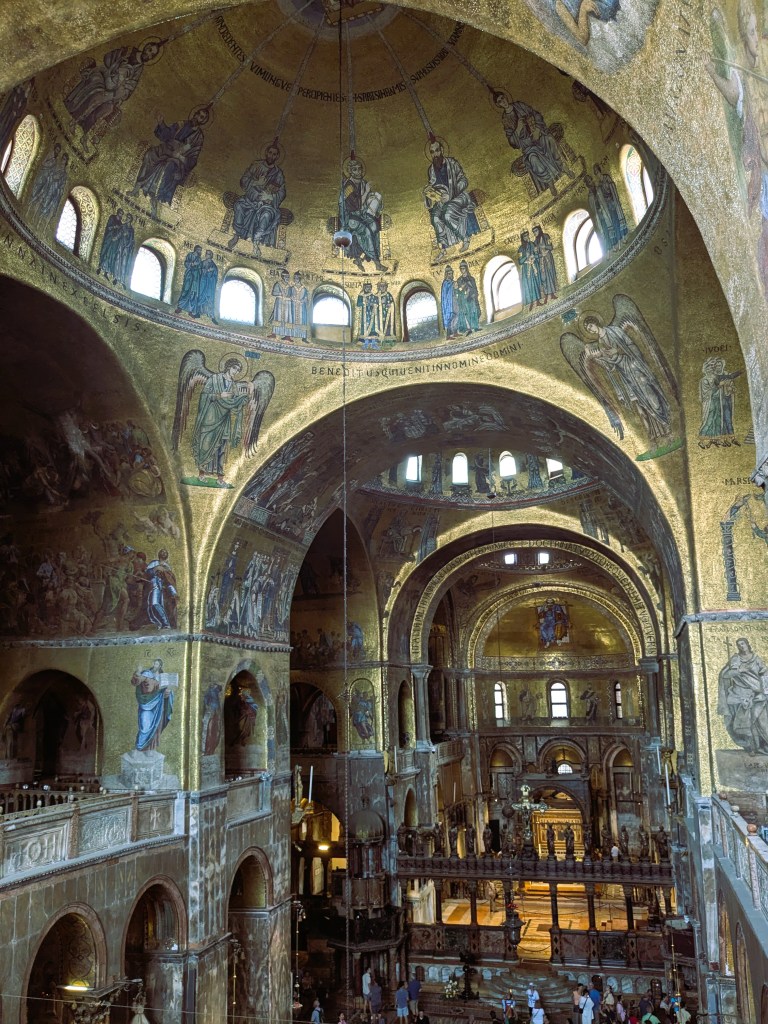
Tickets into the basilica are surprisingly affordable, making it accessible to most visitors. That said, there are additional charges to access some other aspects of the site, such as the Pala d’Oro and the museum including the Loggia dei Cavalli. Personally, I found that paying extra for the museum and gallery level was entirely worth it. The elevated view from the gallery offers a stunning perspective of both the basilica’s interior and the vibrant Piazza San Marco below. As for the Pala d’Oro, a glittering altarpiece adorned with gold and gems, I felt it was slightly underwhelming compared to other parts of the experience, particularly as getting caught in the slow shuffle of visitors starts to make one feel like cattle being pushed through. Your priorities might differ, but I’d suggest focusing on the museum and gallery if you’re choosing where to splurge.
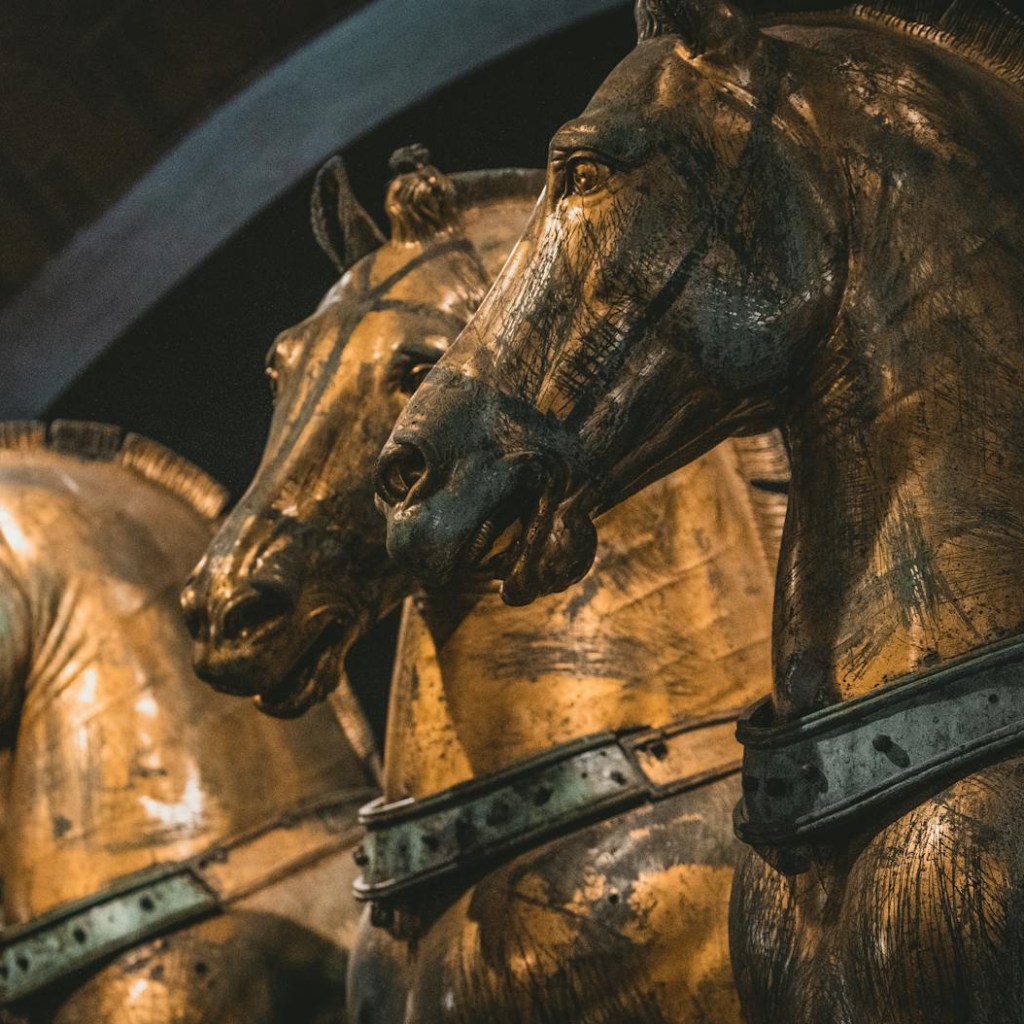
My favourite feature of St Mark’s Basilica is the four Horses of St Mark or the Triumphal Quadriga displayed in the museum. These huge bronze sculptures have a fascinating history. There is some dispute as to whether they are ancient Greek or Roman in origin, and even modern analysis has not been able to conclusively say either way. Stylistic features of the horses, the complex way the individually cast pieces of the sculptures fit together and the presence of mercury in the casting lean towards a Roman origin in the 2nd or 3rd centuries AD.
What is known is that they once adorned the Hippodrome of Constantinople before being taken by Venetian forces during the Fourth Crusade in 1204. The horses were brought back to Venice as spoils of war and placed proudly on the façade of the basilica. They became a symbol of Venice’s power and influence during its height as a maritime republic. However, the horses’ journey didn’t end there. In 1797, Napoleon took them to Paris after his conquest of Venice, where they remained until 1815 when they were returned to the city. Their adventures over centuries have left them slightly battered but rich with stories. To preserve these historic artefacts, the original horses were brought inside the basilica’s museum in the 1980s, and replicas now adorn the exterior facade.
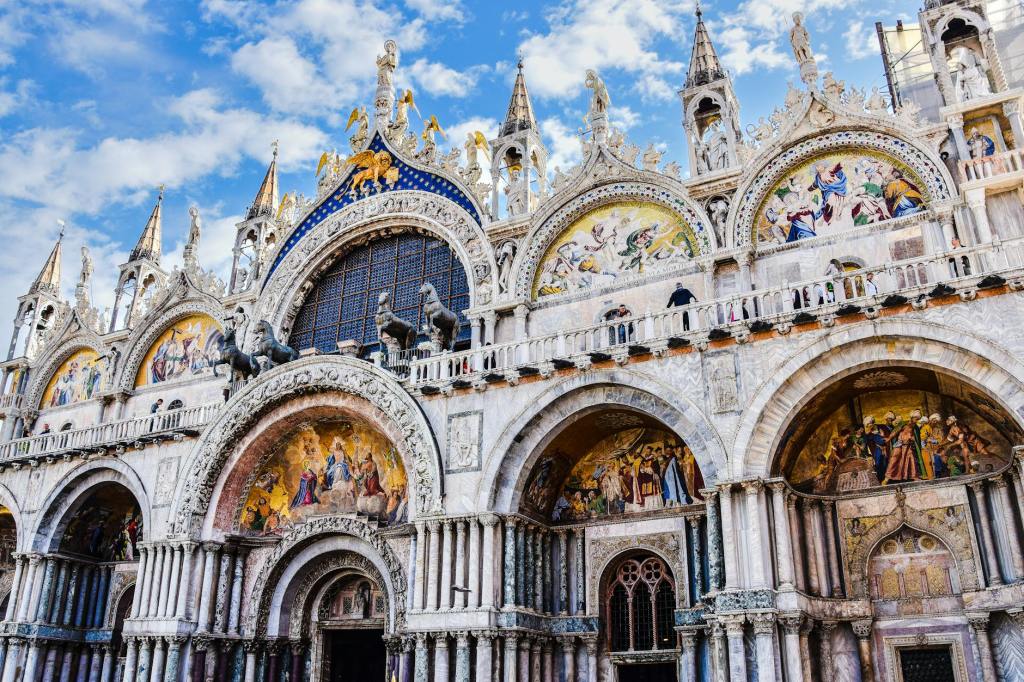
Seeing the replicas on the outside is impressive, but stepping into the museum and standing face-to-face with the originals is an unforgettable experience. The craftsmanship, the detail, and the sheer sense of history they carry are awe-inspiring. You can feel the weight of their past and the centuries of movement they’ve witnessed—from the chariot races of Constantinople to their current resting place in Venice.
If you’re planning a visit to Venice, the Bronze Horses of St Mark’s Basilica are a must-see. With their compelling history and striking beauty, they’re a testament to the enduring legacy of art and power, and a highlight of any trip to this extraordinary city.

If you enjoyed reading this post, please consider buying me a coffee so I can keep travelling and bringing you fascinating content from life on the road…

 The Travelling Archaeologist