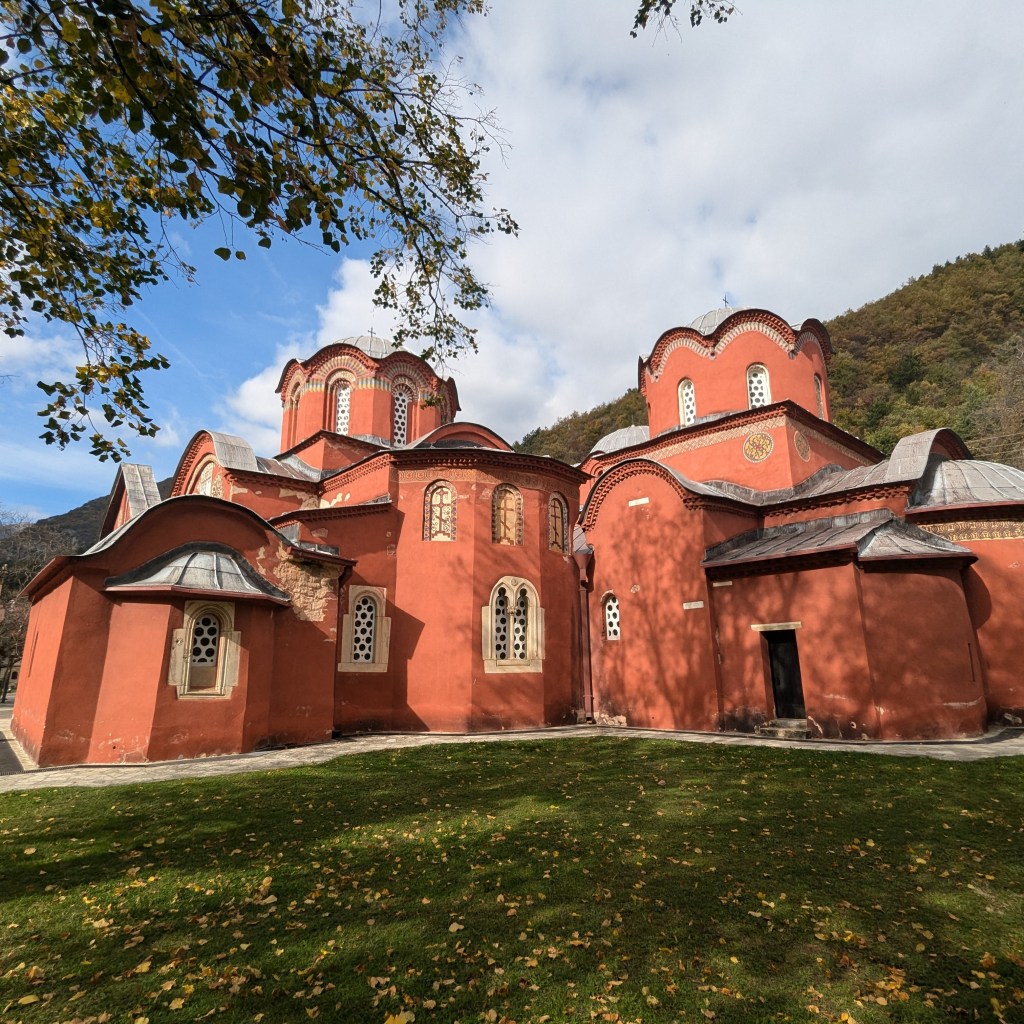
The Patriarchate of Peć Monastery in Pejë, Kosovo, is a place where history and spirituality converge in extraordinary ways. My visit to this serene yet heavily guarded site was as much an encounter with the complexities of the present as it was with the beauty of the past.
When we arrived, the weight of its significance was evident even before entering. A police checkpoint greeted us at the gates, where officers requested to see our passports. This layer of security served as a stark reminder of the tensions that still linger in the region, but it also underscored the importance of the monastery—a place deeply intertwined with the identity and history of the Serbian Orthodox Church.
The monastery itself is a masterpiece of medieval art and architecture, nestled at the base of the dramatic Rugova mountains. Built in the 13th century, it served as the spiritual and administrative center of the Serbian Orthodox Church for centuries. The complex includes several churches, the most notable being the Church of the Holy Apostles, the Church of Saint Demetrius, and the Church of the Virgin Hodegetria. Each structure is adorned with stunning frescoes that seem to glow in the soft light, their colors as vibrant now as they must have been when first painted. These frescoes are masterpieces of Byzantine art, depicting scenes from the life of Christ, saints, and apostles with a sense of grace and movement that is breathtaking.

In 2006, the Patriarchate of Peć was designated a UNESCO World Heritage Site as part of the “Medieval Monuments in Kosovo.” Its inclusion on UNESCO’s endangered list reflects the vulnerability of cultural heritage in areas of political tension.
The security measures in place stem from the monastery’s role in the ongoing and often fraught relationship between Kosovo and Serbia. For many Serbs, the Patriarchate of Peć is not just a religious site but a symbol of their historical and cultural identity. However, Kosovo declared independence in 2008, and its sovereignty is recognized by many nations but remains a point of contention with Serbia. In this context, the monastery becomes more than a spiritual refuge—it is a flashpoint in a deeply complex geopolitical landscape.
As I explored the grounds, it was impossible not to feel the layered history of this place. The tranquility of the monastery, with its ancient trees and the gentle hum of the river flowing nearby, stood in sharp contrast to the palpable undercurrent of tension. This duality—a place of peace in a region shaped by conflict—left a deep impression on me.

The architecture of the monastery reflects a blend of Byzantine and Romanesque styles, with its domed roofs, intricate stone carvings, and monumental walls. Walking through the complex, I was particularly struck by the sense of timelessness. The stones seemed to hold echoes of prayers whispered over centuries, while the frescoes told stories of faith and resilience.
Visiting the Patriarchate of Peć was a poignant reminder of the enduring power of cultural heritage to connect us to the past while shaping how we navigate the present. It is a place where beauty, faith, and history converge—a testament to both the human capacity for creation and the complexities of preserving it in a turbulent world.

If you enjoyed reading this post, please consider buying me a coffee so I can keep travelling and bringing you fascinating content from life on the road…

 The Travelling Archaeologist