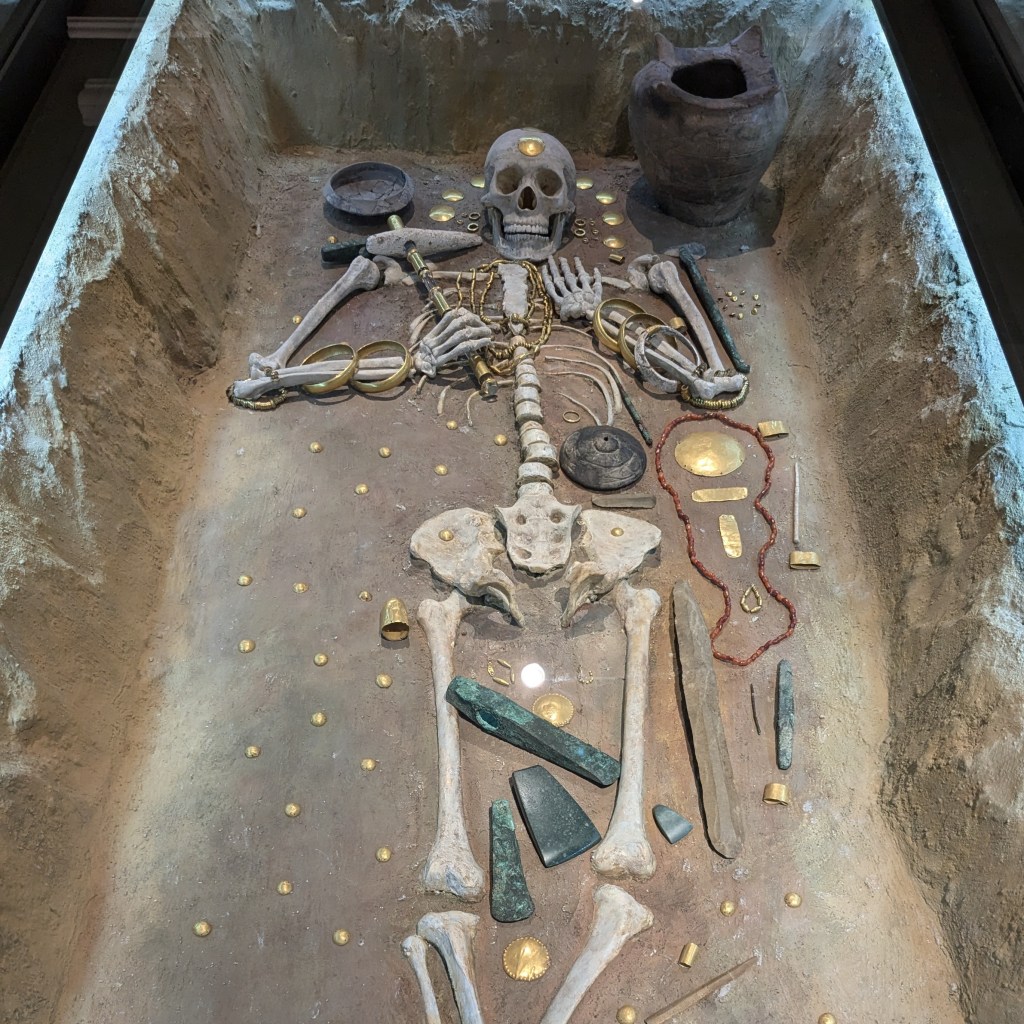
In a quiet corner of Varna, Northeast Bulgaria, lies a treasure that rewrites the narrative of human history. The Varna Gold, discovered in the Varna Necropolis in the 1970s, is housed in a modest museum that belies the profound significance of its contents. This isn’t just a collection of objects; it’s a story of the earliest known civilization to work gold, a window into a world that existed over 6,500 years ago.
The cemetery, dating to approximately 4,600–4,200 BCE, is one of the most important archaeological discoveries of the 20th century. Over 300 graves were unearthed, revealing a complex society from the late Chalcolithic period, also known as the Copper Age. The finds include not only gold but copper tools, ceramics, and intricately worked stone objects, offering a glimpse into a culture that was among the first to mine and process metals. The sheer amount of gold—around 6 kilograms across the site—makes it the oldest cache of worked gold in the world.
The necropolis was discovered by chance in 1972 when a worker digging a trench for electrical cables unearthed gold artifacts. What followed was a careful excavation that revealed a burial ground unlike any other, with certain graves—like the famed Grave 43—containing an astonishing wealth of material, suggesting the presence of a stratified society with distinct roles and rituals.
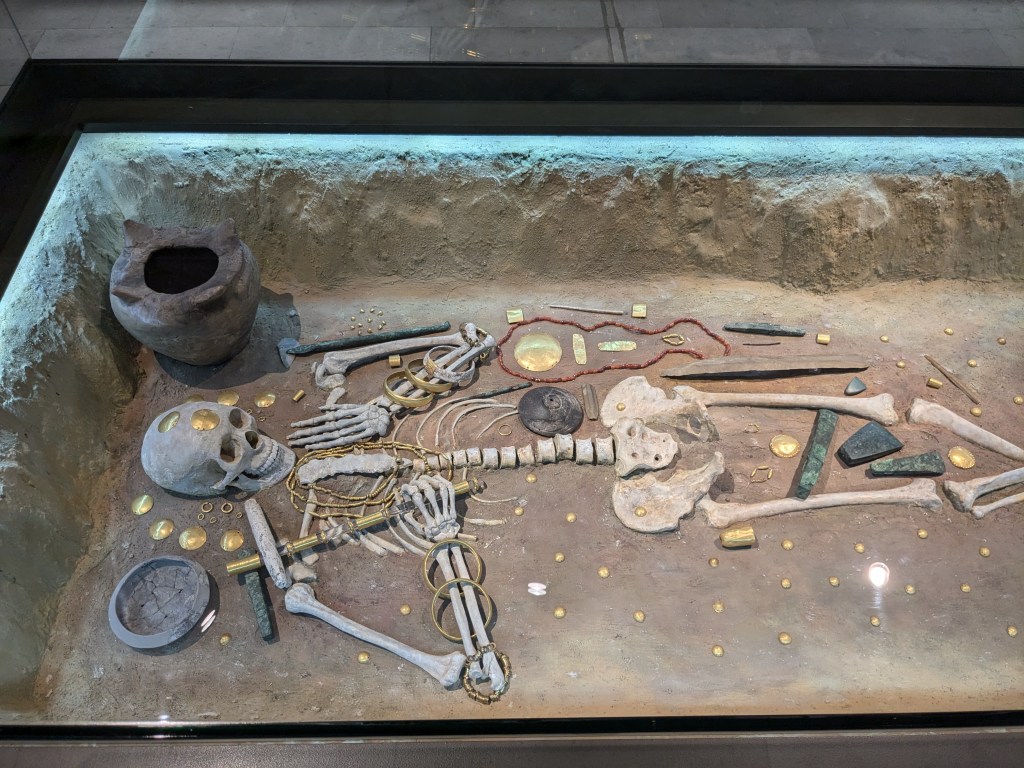
Standing before these artifacts, I felt time collapse.
The gold gleams with an otherworldly brightness, a reminder of its remarkable purity and the skill of the people who shaped it. Delicate ornaments, ceremonial scepters, and intricately worked beads fill the displays, arranged carefully to reflect the graves they were found in. Among them is the burial of a high-status man, adorned with over 1.5 kilograms of gold.
But this isn’t just about wealth. The Varna Gold speaks of identity, belief, and the ways people make meaning from the materials around them. I stood captivated by the realization that this gold, so dazzling now, likely held as much power in life as it did in death.
What struck me most was the sheer intimacy of these items. A bead worn close to the heart, a scepter gripped tightly in a hand long gone—these objects carried the weight of memory, ritual, and human connection.
Among the most compelling discoveries are the graves that contain no skeletons at all. Instead, these symbolic burials hold clay masks, crafted to represent the human face. These masks, often accompanied by gold and other grave goods, suggest a rich ritual life where objects stood in for the physical presence of the dead. Were they memorials for those whose bodies could not be recovered, or perhaps offerings to ancestors or deities? The masks blur the lines between absence and presence, challenging our assumptions about how ancient societies conceptualized life and death.

One of three symbolic or ‘cenotaph’ burials where clay masks adorned with gold were placed in lieu of human remains in graves
The museum itself is humble, its quiet galleries a sharp contrast to the grandeur of its contents. It felt fitting—this is not a place of spectacle but of reverence. Visitors were hushed, their voices barely above a whisper, as if instinctively aware that they were in the presence of something sacred.
For travelers, Varna Museum offers more than a glimpse into history—it’s a reminder of how connected we are to the past. Practicalities are straightforward: the museum is easily accessible from Varna’s city center, and tickets are reasonably priced at around five euros (though expect to pay in Lev). Plan to spend at least an hour, though if you’re like me, you’ll find yourself lingering, drawn back to certain displays for just one more look.
For anyone traveling through Bulgaria, the Varna Gold is a must-see. It’s not just a historical site but a space where you can stand at the intersection of humanity’s past and present, feeling the hum of continuity beneath the surface of the everyday. And really, despite when archaeologists try to persuade you it’s not all about the shiny things, sometimes it definitely is.

If you enjoyed reading this post, please consider buying me a coffee so I can keep travelling and bringing you fascinating content from life on the road…

 The Travelling Archaeologist