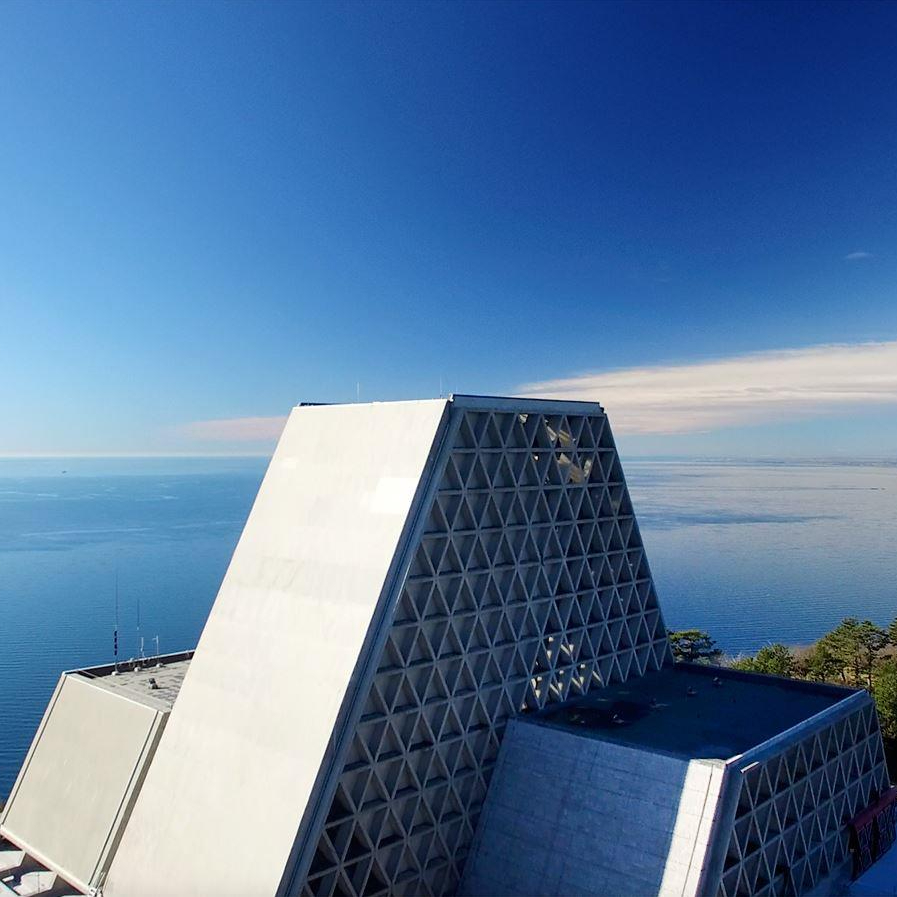
High above the shimmering Adriatic, perched on a ridge overlooking Trieste, the Temple of Monte Grisa is impossible to miss. Its geometric, triangular silhouette cuts sharply into the skyline, a bold and unapologetic statement of brutalist architecture. As someone who has always loved Brutalism—with its unapologetic rawness and the austere beauty of soaring concrete—visiting this monumental church felt like a pilgrimage to one of my favorite architectural styles.
Brutalism has a reputation for dividing opinion. Its heavy, angular forms are often seen as stark, even oppressive, but to me, there’s a profound honesty in it. Growing up in Coventry—a city rebuilt after the devastation of the Second World War—taught me to find beauty in these bold, functional designs. Coventry Cathedral and the city’s many concrete buildings became part of my visual vocabulary, and they instilled in me a deep appreciation for the resilience and creativity brutalism represents. The Temple of Monte Grisa, with its striking and unconventional design, felt like a continuation of that love.
The temple, officially called the “Santuario Nazionale a Maria Madre e Regina,” was built between 1963 and 1965. Its unique design was the vision of architect Antonio Guacci, who sought to create a sacred space that embodied the post-war hope for peace and unity. The result is a triangular structure composed of interlocking concrete forms, creating a series of soaring, almost crystalline spaces. The temple’s design is said to represent the Trinity and the letter “M” for Mary, emphasizing its dedication to the Virgin Mary.
Walking around the temple, I marveled at the way its angular forms play with light and shadow. The exposed concrete, weathered by decades of Adriatic winds, has taken on a patina that feels alive, full of texture and depth. Despite its rigid geometry, the structure feels harmonious with its natural surroundings. The triangles frame views of the sea, the city, and the surrounding hills, creating a constant dialogue between the built environment and the landscape.
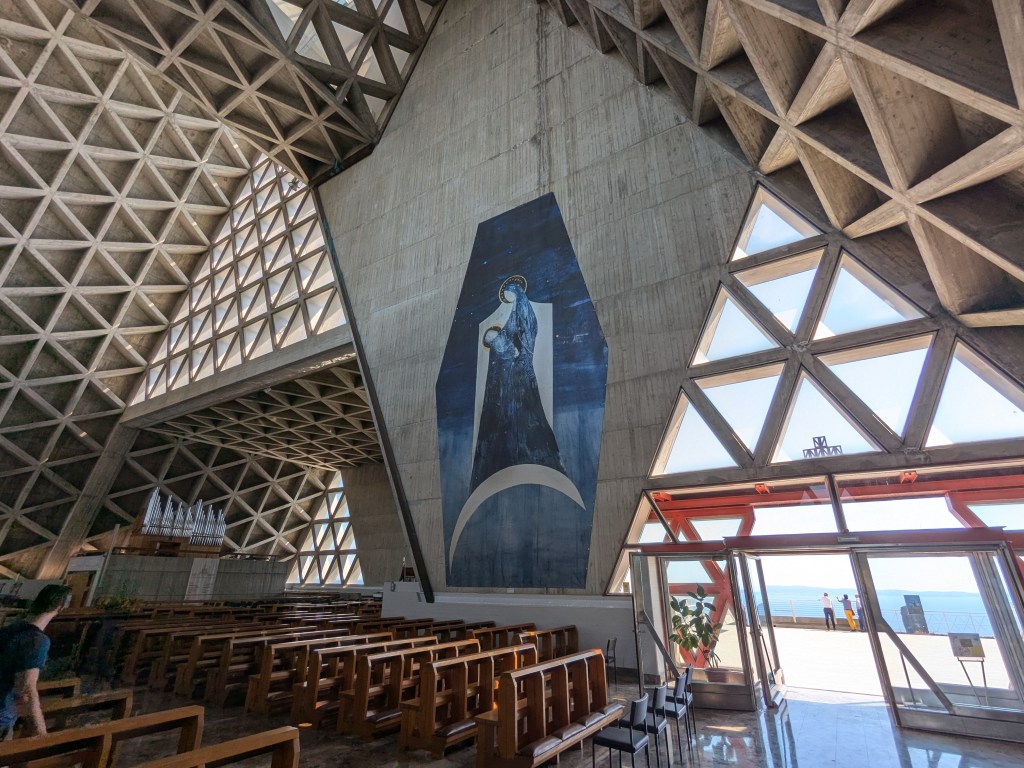
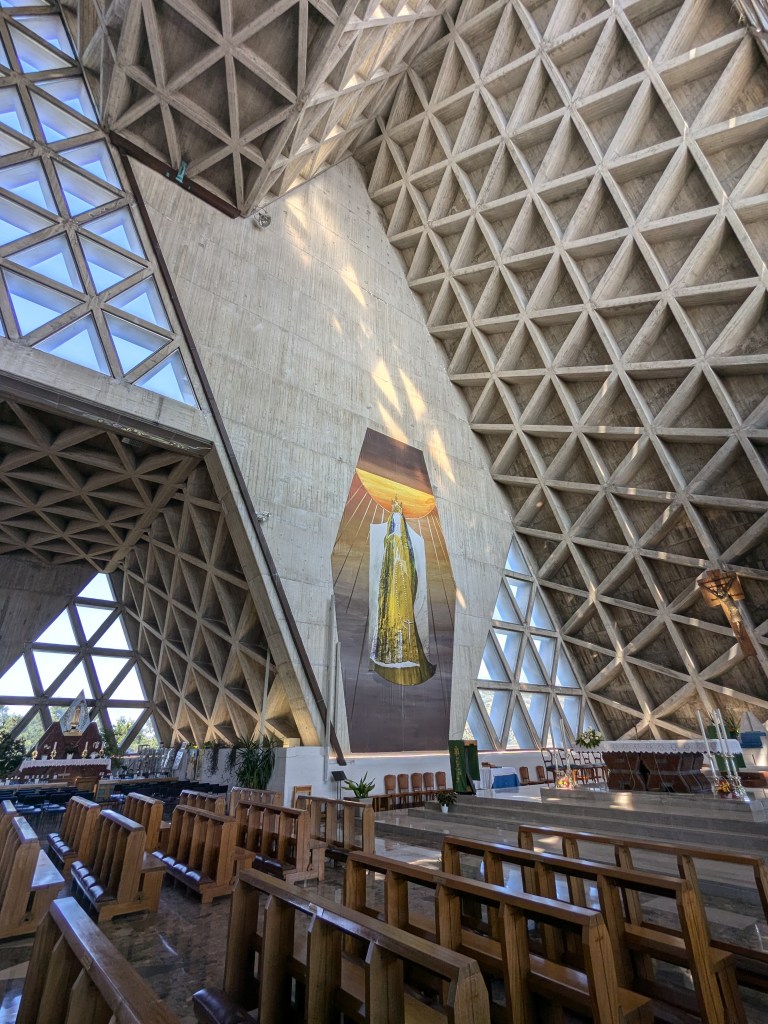
Inside, the atmosphere shifts. The cavernous interior is both stark and serene, with shafts of light filtering through triangular windows to illuminate the raw concrete walls. It’s a space that feels introspective, inviting visitors to pause and reflect. I found myself drawn to the interplay of materials and the simplicity of the design—it’s a reminder that beauty doesn’t have to be ornate to be profound.
The Temple of Monte Grisa was built during a period of immense change and optimism in Italy, and its bold design reflects that era’s spirit of experimentation and ambition. It’s a reminder of the power of architecture to make statements, to inspire, and to provoke thought. For me, it also sparked a sense of connection to my roots—a nod to the brutalist buildings of my childhood and the enduring impact they’ve had on my aesthetic sensibilities.
As I stood on the terrace of the temple, looking out over Trieste and the endless blue of the Adriatic, I felt a sense of awe. This place, with its austere beauty and soaring concrete, encapsulates everything I love about Brutalism. It’s not just a building; it’s a testament to the power of vision, resilience, and creativity. If you have an appreciation for unconventional architecture or simply want to experience something striking and unique, the Temple of Monte Grisa is well worth the visit.

If you enjoyed reading this post, please consider buying me a coffee so I can keep travelling and bringing you fascinating content from life on the road…

 The Travelling Archaeologist